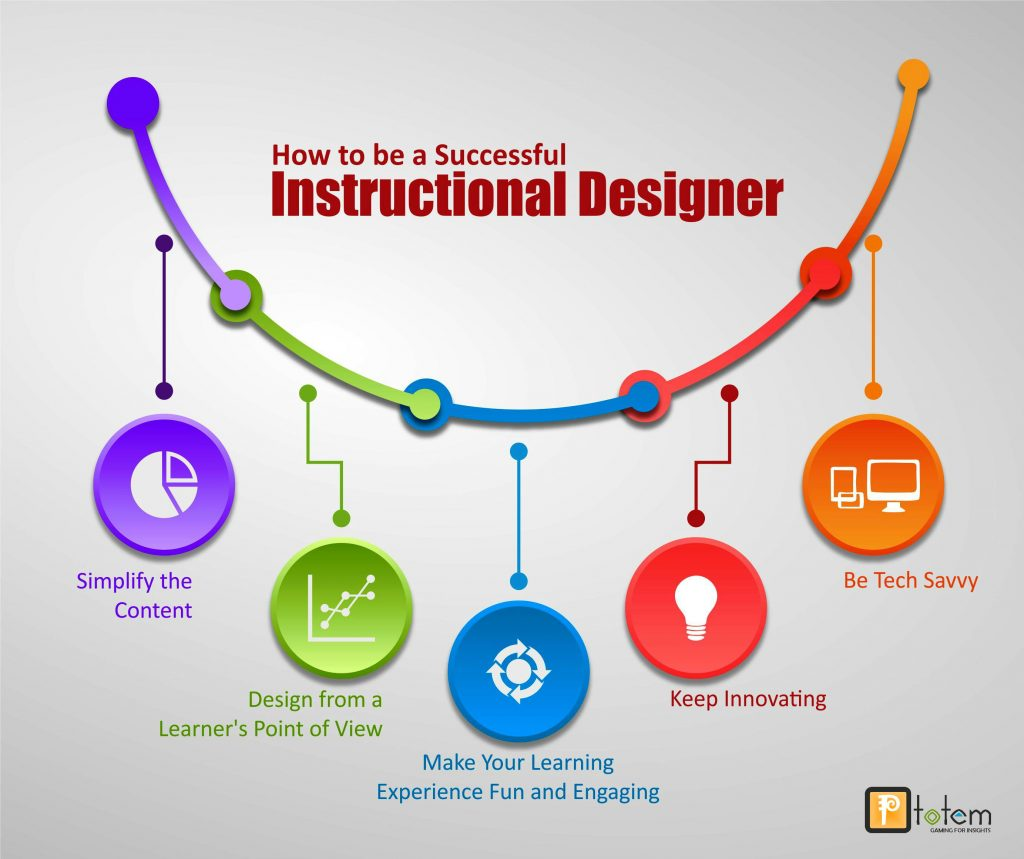
Ohhh, that's what an Instructional Designer does?


If you are an educator like me you probably came to instructional design out of frustration. Most educators that I know have googled some version of "What can I do with my teaching degree other than teaching?" It's kind of a right of passage in the world of teaching. Instructional design pops up at the top of the list and I will admit that I did not have a clear understanding of what an instructional designer did until I was a few classes in. 

Now that I am nearing the end of my program I see instructional design everywhere. I am also feeling more confident about where I want to end up (or my new starting point) when I finish this journey. I can't wait to merge my love of education with my newfound understanding of design. Look out for a inclusive, technology forward curriculum that is engaging for students. Whew that is a tall order!

Comments

  1. I kinda felt the same thing. Everything is about learning and it provides us with lots of opportunities and challenges at the same time. Keep going! You've got this!

    ReplyDelete

Post a Comment

Popular posts from this blog

But I Want It Now!!

  I have been struggling with our upcoming knowledge sharing assignment. I think the problem is that I have too many big ideas. I want my students to all have access to the internet. I want my kids to all be fluent. I want them to know how to do all the things. In an ideal world, I would be able to go into my classroom on day one and incorporate every tool that we learned about in this class. I want all of these thing and I want them right now! Here's the problem. I have to do the work. If I want my big ideas to work, I have to start small. The problem is that small sometimes feels too small. I always want to put my spin on it, to try and make it my own. For me, curating and sharing the content of other people feels a little dishonest. Even when you give credit, someone is getting the idea from you and they might attribute it to you. I am much more comfortable sharing something verbally, than I am sharing something in a online space.  I am starting to understand that sharing c...

Think Big!!!

  Full transparency I thought this produsage assignment would be a piece of cake. After all this is what I do. I have written thousands of lesson plans over the past 27 years. What actually happened, I got a really good wake up call about how teaching and instructional design are not the same. Let me explain. Good teachers think small. They write lessons that are tailor made for the students who are sitting in front of them that year (or class period). The idea of knowing your kids and creating an assignment that is tailor made for them is the goal. The ideal.  When I started the produsage assignment I approached it from this direction. What will the sixth graders that I have in my class this year be able to do? What do I want to accomplish with them? What I have come to realize that instructional designers think BIG ! It's not about what you need for just a few kids who you see everyday. Instructional designers create lessons on a much larger scale. The lessons you create nee...

Social Media In Class! How Does That Work?

The Networked Knowledge Activities Framework (NKA) will be useful to educators who are trying to find ways to incorporate social media sites into the formal classroom environment. The framework outlines six activities that users participate in while they are participating in online activities. Online users collect, curate, share, broker, negotiate, and construct knowledge using the information they find on the internet. Collection refers to the process of saving a link for an item so it can be found and used later. Users curate information by creating organized collections of online artifacts. Users share informations that has been collected or curated in an online forum. These activities and their descriptions provide educators with a starting point when they are attempting to embed social networking sites into classroom activities. Brokers act as agents between networks of people. Learners negotiate to come up with shared meaning and understanding. Finally some learners ...